Rwanda Increases Agricultural Productivity Targets 13-Fold by 2050
Rwanda sets ambitious agricultural goals to boost productivity 13 times by 2050 as food security improves nationwide.

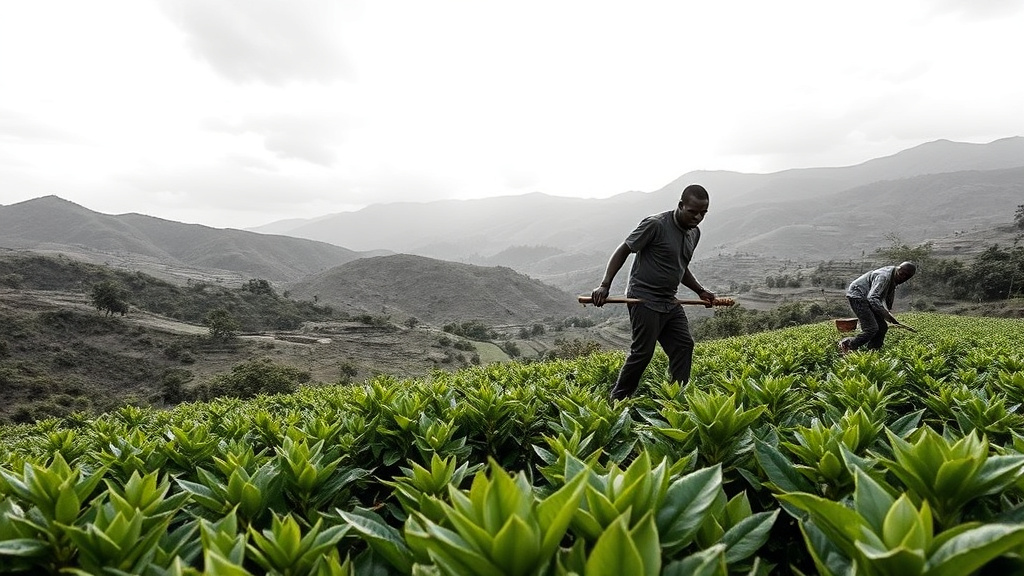
Rwanda has announced ambitious agricultural transformation plans that aim to increase productivity per hectare by 13 times before 2050, marking a significant shift in the country's approach to food security and rural development. The announcement comes as the East African nation reports substantial improvements in food security indicators and declining hunger rates across its 30 districts. This bold target represents one of the most aggressive agricultural modernization programs on the continent, building on Rwanda's track record of implementing comprehensive development strategies. The initiative aligns with Rwanda's Vision 2050, which seeks to transform the country into a high-income economy while ensuring food security for its 13.4 million citizens.
Rwanda's Agricultural Transformation Strategy and Implementation
The 13-fold productivity increase target builds on Rwanda's existing Crop Intensification Program (CIP), which has already demonstrated significant results since its launch in 2008. According to the Ministry of Agriculture and Animal Resources, the program has increased maize yields from 1.5 tons per hectare to 3.2 tons per hectare between 2008 and 2023. The strategy focuses on four key pillars: land consolidation, improved seed varieties, fertilizer use, and mechanization. Rwanda's unique geographical position in the Great Lakes region, with its volcanic soils and favorable climate, provides natural advantages for intensive agriculture across its 26,338 square kilometers.
The government's approach emphasizes technology adoption and farmer education programs that have reached over 2.1 million smallholder farmers according to 2023 data from the Rwanda Agriculture Board. "We are moving from subsistence farming to commercial agriculture with a focus on high-value crops that can compete in regional and international markets," said Agriculture Minister Ildephonse Musafiri during a recent parliamentary session. The strategy includes establishing agricultural processing zones in each of Rwanda's five provinces, with particular emphasis on Eastern Province's rice production and Southern Province's coffee cultivation. Land consolidation efforts have already merged fragmented plots into larger, more efficient farming units covering 1.8 million hectares.
Food Security Improvements and Hunger Reduction Metrics
Rwanda's food security indicators have shown remarkable improvement over the past decade, with the prevalence of undernourishment declining from 32.4% in 2010 to 18.2% in 2023 according to the World Food Programme's latest assessment. The Global Hunger Index score for Rwanda improved from 29.2 in 2015 to 22.1 in 2023, moving the country from the "serious" to "moderate" hunger category. These improvements reflect successful implementation of social protection programs including the Vision 2020 Umurenge Programme (VUP), which provides direct support to 358,000 vulnerable households across the country. The One Cow per Poor Family program has also contributed significantly, with over 400,000 families receiving cattle to improve nutrition and income generation.
Read Also
Kenyan AI Startup AfriLang Raises $15M to Build Language Models for 50+ African LanguagesNairobi-based AfriLang AI has closed a $15 million Series A to develop AI language models purpose-built for African languages, from Swahili to Wolof.
Seasonal food insecurity, which traditionally affected the Northern and Western provinces during the dry season, has decreased by 40% since 2020 according to the National Institute of Statistics of Rwanda. The country has also reduced post-harvest losses from 35% to 15% through improved storage facilities and processing technologies. "Our focus on nutrition-sensitive agriculture has enabled us to address not just food availability but also food quality and dietary diversity," noted Dr. Gerardine Mukeshimana, Director General of the Rwanda Agriculture Board. Regional cooperation through the East African Community has facilitated cross-border trade, with Rwanda exporting surplus maize and beans to neighboring Democratic Republic of Congo and importing rice from Tanzania during deficit periods.
Regional Context and International Support for Agricultural Development
Rwanda's agricultural transformation occurs within the broader context of Africa's struggle with food security, where 278 million people faced acute food insecurity in 2023 according to the African Union's Continental Early Warning System. The country's approach contrasts with many African nations that rely heavily on food imports, as Rwanda aims for 85% food self-sufficiency by 2030. International partners including the World Bank, which approved a $200 million agricultural transformation project in 2022, and the International Fund for Agricultural Development support these initiatives. The African Development Bank has also committed $150 million toward Rwanda's agricultural modernization through its Feed Africa strategy.
The success of Rwanda's model has attracted attention from other African countries, with delegations from Ghana, Senegal, and Ethiopia visiting to study the Crop Intensification Program. Climate change adaptation remains a critical component, as Rwanda experiences increasingly unpredictable rainfall patterns affecting its two main growing seasons. The country has invested in irrigation infrastructure covering 78,000 hectares and plans to expand this to 165,000 hectares by 2030. Rwanda's commitment to achieving these ambitious agricultural targets while maintaining environmental sustainability positions it as a potential model for agricultural transformation across sub-Saharan Africa, where similar challenges of population growth, land scarcity, and climate variability persist.
Source: AllAfrica - Rwanda's Food Security Rises As Hunger Declines
Source: AllAfrica
Related Articles
 Top Stories
South Sudan Electoral Reforms Face Critical Deadline as Three Peace Initiatives Launch
South Sudan grapples with implementing crucial electoral reforms as international mediators launch three parallel peace initiatives. Time is running out for meaningful elections in the world's youngest nation.
 Top Stories
UNICEF Warns 1.8 Million Somali Children Face Severe Malnutrition Crisis
UNICEF chief raises alarm over worsening child malnutrition in Somalia, citing fuel costs, supply disruptions, and ongoing drought. International support urgently needed to prevent humanitarian catastrophe.
 Top Stories
Kenya Ships First Zero-Tariff Export Consignment to China Under New Trade Deal
Kenya launches historic first shipment to China under new zero-tariff agreement, aiming to address trade imbalance. The deal covers over 98% of Kenyan exports to the Asian economic giant.