Cameroon Parliament Approves Vice-President Position After 40 Years
President Paul Biya will get his first vice-president in four decades of rule following controversial constitutional changes.

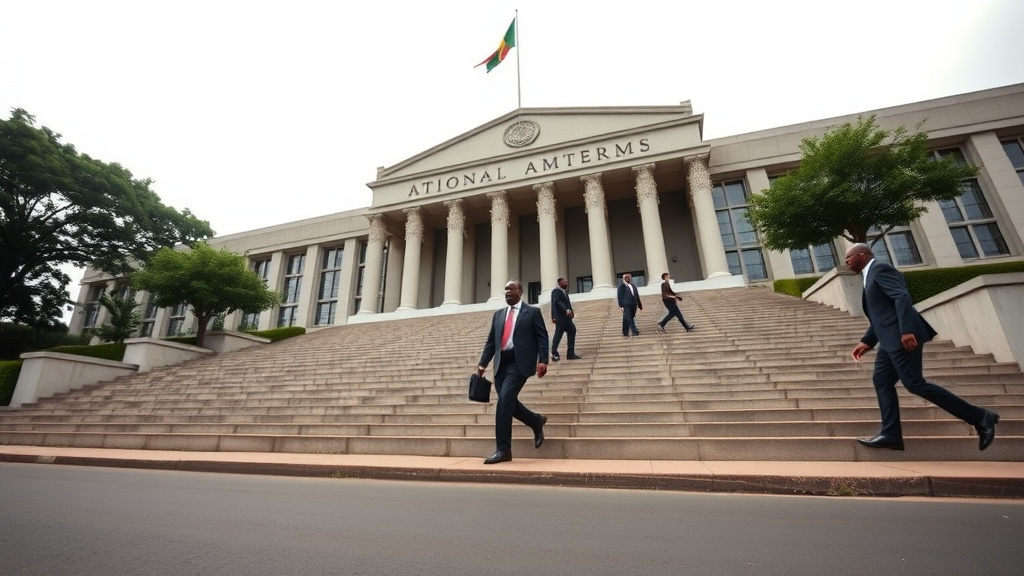
Cameroon's parliament has approved controversial constitutional amendments that will establish the position of vice-president for the first time since President Paul Biya assumed power over four decades ago. The legislative changes mark a significant shift in the Central African nation's political structure, ending one of the longest periods of single-executive rule in modern African politics. The amendments have sparked intense debate among political observers and civil society groups about the motivations behind the timing and the potential implications for Cameroon's democratic trajectory.
Constitutional Reform Process and Parliamentary Debate
The constitutional amendments were passed following extensive parliamentary sessions that saw heated exchanges between ruling party members and opposition legislators. The Cameroon People's Democratic Movement (CPDM), which holds a commanding majority in both houses of parliament, pushed through the legislation despite vocal opposition from smaller parties. According to parliamentary records, the amendments received support from 143 out of 180 National Assembly members present during the vote. The Senate subsequently endorsed the changes with 85 out of 100 senators voting in favor, meeting the constitutional requirement for a two-thirds majority in both chambers.
Opposition leader Maurice Kamto of the Cameroon Renaissance Movement criticized the process, stating, "This constitutional manipulation is designed to perpetuate the current system rather than democratize it. The Cameroonian people deserve genuine political reform, not cosmetic changes that consolidate power." The amendments also include provisions for restructuring the Constitutional Council and modifying presidential succession protocols, changes that legal experts say could have far-reaching implications for the country's governance structure.
Historical Context and Regional Implications
The establishment of a vice-presidency represents a dramatic departure from Cameroon's political tradition since reunification in 1972. President Biya, who has ruled since 1982, previously abolished the position of prime minister's deputy and concentrated executive power within the presidency. The move comes as several African nations have grappled with questions of political succession and democratic transition, with countries like Algeria, Zimbabwe, and Sudan experiencing significant political upheavals in recent years.
Regional analysts note that Cameroon's decision occurs against the backdrop of ongoing security challenges in the Far North region, where Boko Haram insurgency continues to threaten stability, and persistent tensions in the Anglophone regions. According to the United Nations Office for the Coordination of Humanitarian Affairs, over 6.2 million Cameroonians require humanitarian assistance as of 2024, largely due to these conflicts. The International Crisis Group reported that the Anglophone crisis alone has displaced more than 765,000 people since 2017, creating one of Africa's most underreported humanitarian emergencies.
Read Also
Nigerian Billionaire Secures $2B Rail Deal Connecting Lagos, Accra and AbidjanA $2 billion private infrastructure deal will fund a high-speed rail network across three West African countries, marking the largest private investment in African transport this decade.
Political Reactions and Democratic Concerns
Civil society organizations have expressed mixed reactions to the constitutional changes, with some viewing them as potential steps toward political opening while others see them as strategic maneuvering ahead of future elections. Transparency International Cameroon noted that the amendments lack clear timelines for implementation and fail to address fundamental issues of electoral transparency and judicial independence. Human rights activist Maximilienne Ngo Mbe stated, "While any constitutional reform deserves attention, we must ensure these changes serve the people's interests rather than narrow political calculations."
The Economic Community of Central African States (ECCAS) has not issued an official statement on the constitutional amendments, but diplomatic sources suggest regional leaders are closely monitoring developments given Cameroon's strategic importance as the region's largest economy. With a GDP of approximately $45.18 billion according to World Bank data for 2023, Cameroon plays a crucial role in Central African economic integration and serves as a key partner in regional security initiatives against terrorism and organized crime.
The constitutional changes are expected to take effect following presidential promulgation, though no timeline has been announced for appointing the new vice-president. Political analysts suggest the position could be used to balance regional or ethnic representation within the executive branch, potentially addressing some of the grievances that have fueled political tensions in various parts of the country. However, opposition groups remain skeptical about whether these reforms will translate into meaningful political change or simply represent administrative restructuring that maintains the status quo under a different institutional framework.
Source: AllAfrica - Cameroon: Parliament Approves Return of Vice-President in Cameroon
Source: AllAfrica
Related Articles
 Top Stories
UAE Investment in CEMAC Region Reaches $5.2 Billion as Economic Ties Deepen
The UAE emerges as a major economic partner in Central Africa, with investments reaching $5.2 billion across CEMAC nations. New partnerships focus on infrastructure, renewable energy, and financial services.
 Top Stories
ECOWAS Launches Counter-Terrorism Force Amid Rising West African Security Threats
ECOWAS establishes new counter-terrorism brigade to combat rising extremist threats in West Africa. Initiative faces coordination and funding challenges amid regional instability.
 Top Stories
Liberia Government Defends Weedor Nomination As Elections Chief
Information Minister Piah defends NEC Chairman nominee Jonathan Weedor amid opposition criticism. Civil society groups question nomination.