Ethiopia Assumes AU Peace Security Council Chair April 2026
Ethiopia takes leadership of African Union Peace and Security Council for April 2026, marking first chairship since rejoining the body in 2025.

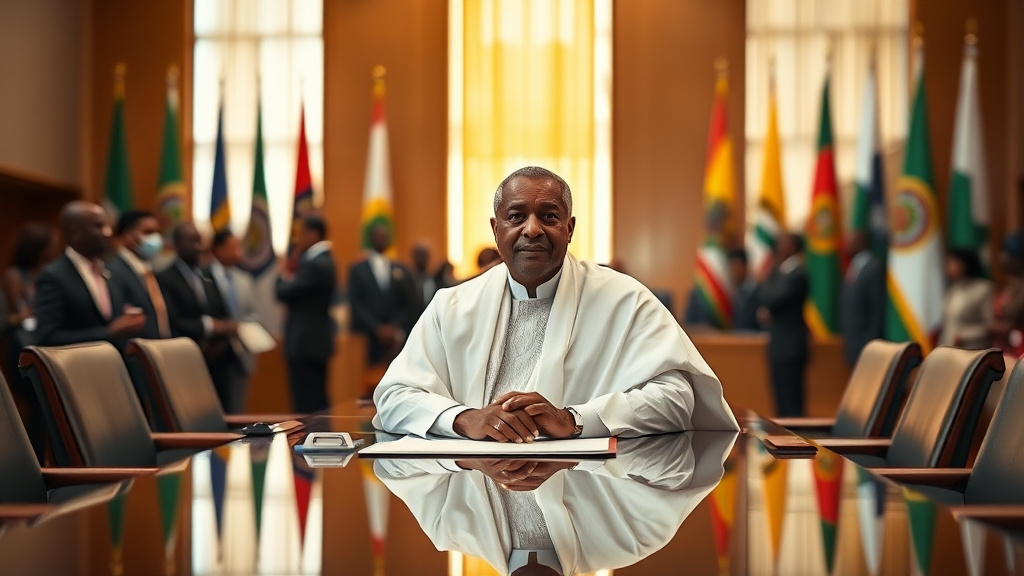
Ethiopia has officially assumed the chairship of the African Union Peace and Security Council for April 2026, marking a significant milestone as the country's first time leading the influential body since rejoining it in April 2025. The transition ceremony took place at the AU headquarters in Addis Ababa, where Ethiopian representatives outlined their priorities for addressing continental security challenges. This development represents a crucial moment for both Ethiopia and the broader African security architecture, as the Horn of Africa nation seeks to leverage its diplomatic experience and strategic location to advance peace initiatives across the continent. The appointment comes at a time when Africa faces multiple security challenges, from terrorism in the Sahel to conflicts in Sudan and the Democratic Republic of Congo.
Ethiopia's Return to Continental Security Leadership
Ethiopia's assumption of the Peace and Security Council chairship represents a remarkable diplomatic comeback for the country, which had previously stepped back from key AU leadership roles during internal conflicts. The nation's return to prominence within the AU's premier security organ reflects improved relations with continental partners and recognition of Ethiopia's historical role in African diplomacy. As the host country of the African Union headquarters, Ethiopia has long been considered the diplomatic capital of Africa, with over 100 diplomatic missions based in Addis Ababa. The country's experience in peacekeeping operations, including deployments to Somalia through AMISOM and its successor ATMIS, positions it well to understand the complexities of African security challenges.
According to AU Commission data, the Peace and Security Council has authorized over 15 peace support operations since its establishment in 2004, with a combined budget exceeding $20 billion. Ethiopia has contributed more than 8,000 peacekeepers to various AU missions over the past two decades, making it one of the largest troop-contributing countries on the continent. The council operates under the principle of "African solutions to African problems," a philosophy that Ethiopia has consistently championed throughout its diplomatic history. Ethiopian officials emphasized that their chairship would focus on preventive diplomacy and early warning systems to address conflicts before they escalate into full-scale wars.
Continental Security Priorities Under Ethiopian Leadership
During its chairship, Ethiopia is expected to prioritize several critical security issues affecting the African continent, including the ongoing conflicts in Sudan, the security situation in the Sahel region, and the persistent challenges in the Great Lakes region. The country has already indicated its intention to strengthen the AU's early warning system and enhance coordination between regional economic communities and the continental body. Ethiopian Foreign Ministry sources suggest that the chairship will focus on building consensus around sustainable financing mechanisms for peace operations, addressing a long-standing challenge that has limited the effectiveness of AU interventions. The timing of Ethiopia's leadership coincides with the AU's broader institutional reforms aimed at increasing the organization's autonomy and effectiveness in managing continental affairs.
"Ethiopia's assumption of the Peace and Security Council chairship comes at a critical juncture when the continent faces unprecedented security challenges," noted Dr. Mehari Taddele Maru, a senior researcher at the Institute for Security Studies. The country's diplomatic approach will likely emphasize dialogue and reconciliation, drawing from its own recent experience in managing internal conflicts and political transitions. Ethiopia's chairship agenda includes strengthening partnerships with international organizations, particularly the United Nations, to ensure complementarity in peace operations and avoid duplication of efforts. The country has committed to organizing at least three high-level consultative meetings during its tenure to address emerging security threats and develop coordinated responses.
Read Also
Ethiopia Unveils $8B Renewable Energy Complex With 10GW CapacityA combined solar, wind, and geothermal facility in Ethiopia's Rift Valley aims to become Africa's largest clean energy project and export surplus power to five neighboring countries.
Regional and International Implications
Ethiopia's leadership of the Peace and Security Council carries significant implications for regional stability, particularly in the Horn of Africa where the country plays a central role in various diplomatic initiatives. The nation's strategic position at the crossroads of Africa, the Middle East, and the Red Sea trade routes gives it unique insights into security challenges that transcend continental boundaries. Regional analysts expect Ethiopia to leverage its chairship to advance peace processes in neighboring countries, including ongoing efforts to stabilize Somalia and address tensions between Sudan and South Sudan. The country's experience hosting peace negotiations, including the recent Tigray peace agreement, demonstrates its capacity to facilitate complex political dialogues.
"Ethiopia's return to continental leadership reflects the dynamic nature of African diplomacy and the importance of inclusive approaches to peace and security," observed Ambassador Bankole Adeoye, AU Commissioner for Political Affairs, Peace and Security. The international community has expressed cautious optimism about Ethiopia's chairship, with several Western and regional partners indicating readiness to support AU initiatives under Ethiopian leadership. The European Union, which provides significant funding for AU peace operations through its African Peace Facility, has committed to maintaining its support regardless of which country chairs the council. Ethiopia's success in this role could potentially influence its broader diplomatic rehabilitation and strengthen its position in other international forums.
The implications of Ethiopia's chairship extend beyond immediate security concerns to encompass broader questions about African institutional capacity and leadership rotation within continental organizations. As Africa grapples with increasing security challenges amid limited resources, the effectiveness of Ethiopia's leadership could serve as a test case for the AU's ability to adapt and respond to evolving threats. The country's approach to balancing national interests with continental responsibilities will be closely watched by other member states and international partners. Success in this role could enhance Ethiopia's soft power and reinforce its position as a key player in African affairs, while failure could undermine confidence in the AU's institutional mechanisms.
Source: AllAfrica - https://allafrica.com/stories/202604030497.html
Source: AllAfrica
Related Articles
 Top Stories
Kenya's Ruto Discusses Operation Epic Fury with US State Department in Security Talks
President William Ruto held talks with US officials on regional security and Operation Epic Fury. Kenya's strategic position in East Africa continues to shape its role in global security matters.
 Top Stories
Global Fund Grants $1.6M Emergency TB Support for Crisis-Hit Sudan Through 2026
The Global Fund approves $1.6 million in emergency funding to support tuberculosis diagnosis and treatment for displaced Sudanese. Program targets IDPs and host communities through 2026.
 Top Stories
Afreximbank and FCI to Host Major Trade Finance Conference in Kampala
African Export-Import Bank and FCI will host a major conference on factoring and trade finance in Uganda, aiming to boost SME access to funding and increase intra-African trade.