Ethiopia Unveils $8B Renewable Energy Complex With 10GW Capacity
A combined solar, wind, and geothermal facility in Ethiopia's Rift Valley aims to become Africa's largest clean energy project and export surplus power to five neighboring countries.

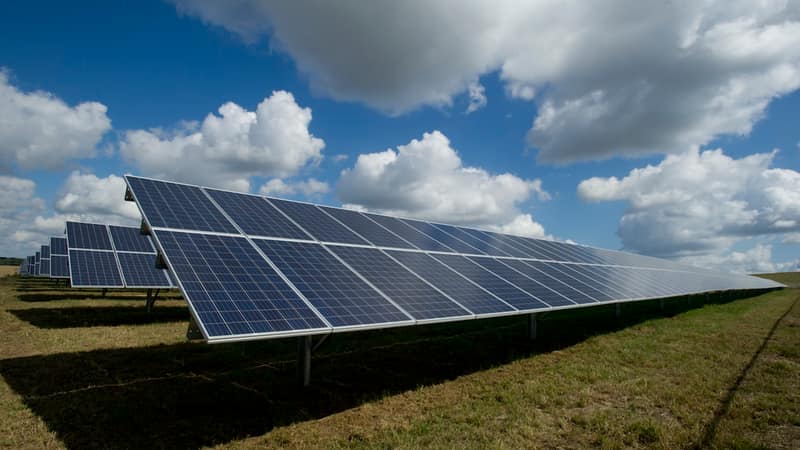
Ethiopia has unveiled plans for what would be the largest renewable energy complex on the African continent: a combined solar, wind, and geothermal facility in the Great Rift Valley capable of generating 10 gigawatts (GW) of clean electricity. The $8 billion project was announced at the Africa Energy Forum in Addis Ababa by Ethiopian Energy Minister Seleshi Bekele.
The complex, dubbed "Horn of Africa Green Energy Hub" (HAGEH), will span 12,000 hectares across the Ziway-Langano corridor in the Rift Valley, approximately 160 kilometers south of Addis Ababa. It will comprise 5 GW of solar photovoltaic capacity, 3 GW of wind power, and 2 GW of geothermal energy extracted from the region's active volcanic geology.
Financing is structured through a consortium led by the African Development Bank (AfDB), which is providing $2.4 billion in concessional loans, alongside $1.8 billion from the World Bank's International Finance Corporation (IFC), $1.5 billion from the European Investment Bank (EIB), and $2.3 billion from private equity investors including Meridiam, Actis, and Africa50.
"This project represents Africa's answer to the global energy transition," Minister Bekele told delegates. "Ethiopia has exceptional renewable resources — 300+ days of sunshine annually in the Rift Valley, consistent wind corridors, and one of the world's most active geothermal regions. It's time we harness them at continental scale."
The project's ambition extends beyond Ethiopia's borders. A key component is the construction of high-voltage direct current (HVDC) transmission lines to export surplus power to Kenya, Djibouti, Sudan, South Sudan, and Tanzania through the Eastern Africa Power Pool (EAPP). Ethiopia already exports electricity to Djibouti and Kenya from the Grand Ethiopian Renaissance Dam; HAGEH would triple the country's export capacity.
Read Also
Ethiopia Assumes AU Peace Security Council Chair April 2026Ethiopia takes leadership of African Union Peace and Security Council for April 2026, marking first chairship since rejoining the body in 2025.
Dr. Fatih Birol, executive director of the International Energy Agency (IEA), described the project as "a potential game-changer for the continent": "Africa has 60% of the world's best solar resources but generates only 1.3% of global solar power. Projects like HAGEH can begin to close that gap."
Construction is expected to begin in Q4 2026, with the first 2 GW solar phase operational by 2028 and full capacity targeted for 2032. During the construction phase, the project is projected to employ 25,000 workers, with 5,000 permanent positions in operations and maintenance.
Environmental impact assessments have been completed by AECOM and reviewed by the Ethiopian Environmental Authority. The assessments identified moderate risks to local birdlife from wind turbines, which will be mitigated through radar-based shutdown systems during migration periods.
Source: Ethiopian Ministry of Water and Energy; African Development Bank project filing; International Energy Agency Africa Energy Outlook 2026.
Related Articles
 Business
U.S.-Africa Business Summit 2026 Opens Registration in Mauritius
Corporate Council on Africa partners with Mauritius government to host major business summit July 2026. Registration now open for Mont Choisy Le Golf venue.
 Business
Nigerian Billionaire Secures $2B Rail Deal Connecting Lagos, Accra and Abidjan
A $2 billion private infrastructure deal will fund a high-speed rail network across three West African countries, marking the largest private investment in African transport this decade.
 Top Stories
Ethiopia Assumes AU Peace Security Council Chair April 2026
Ethiopia takes leadership of African Union Peace and Security Council for April 2026, marking first chairship since rejoining the body in 2025.