Sudan Aviation Industry Seeks Revenue Reform As Khartoum Airport Reopens
Sudan's aviation sector calls for government to ease revenue constraints as Khartoum Airport resumes operations after years of war-related disruptions.


Sudan's aviation industry is pressing the government to relax stringent controls on aviation revenues as Khartoum International Airport prepares to resume normal operations after years of war-induced disruptions. The calls come as officials signal a tentative return to regular air traffic, marking a significant milestone in the country's efforts to rebuild its transportation infrastructure following prolonged conflict. Industry stakeholders argue that loosening revenue constraints could accelerate the sector's recovery and attract international carriers back to Sudanese airspace. The reopening represents both an opportunity and a challenge for Sudan's struggling economy, which has been severely impacted by civil unrest and international sanctions.
Aviation Sector Recovery Amid Economic Challenges
Sudan's aviation industry has faced unprecedented challenges since the outbreak of civil conflict in April 2023, which forced the closure of Khartoum International Airport and severely disrupted air travel across the country. According to the International Air Transport Association (IATA), Sudan's aviation sector contributed approximately $1.2 billion to the national economy before the current crisis, supporting over 45,000 jobs directly and indirectly. The airport's closure resulted in significant revenue losses for both the government and private aviation companies, with many international airlines suspending operations indefinitely. Port Sudan Airport became the primary gateway for international flights, but its limited capacity could not fully compensate for Khartoum's strategic importance as a regional hub connecting East and West Africa.
The Sudanese Civil Aviation Authority has been working closely with international partners to ensure safety standards meet global requirements before full operations resume. Aircraft maintenance facilities, air traffic control systems, and ground handling equipment all require extensive inspection and potential upgrades after months of inactivity. Regional aviation experts estimate that restoring full operational capacity could take between six to twelve months, depending on security conditions and available funding. The World Bank has indicated potential support for infrastructure rehabilitation, but emphasizes the need for transparent revenue management and regulatory reforms.
Government Revenue Controls Under Scrutiny
Aviation industry representatives have specifically criticized the government's centralized approach to collecting and distributing aviation-related revenues, arguing that excessive bureaucratic controls stifle growth and discourage investment. "The current revenue structure creates unnecessary bottlenecks that prevent our industry from responding quickly to market opportunities," stated Ahmed Hassan, Director of the Sudan Aviation Companies Association, in a recent interview with local media. Under existing regulations, all aviation revenues must be channeled through government-controlled accounts, with funds often subject to lengthy approval processes before being released to operators. This system has been particularly problematic during the crisis period, when companies needed rapid access to funds for maintenance, security, and staff retention.
The government's approach reflects broader concerns about foreign currency management and economic stability, as aviation revenues represent a significant source of hard currency earnings. Central Bank of Sudan data shows that aviation services generated approximately $340 million in foreign exchange earnings in 2022, before the current crisis began. However, industry advocates argue that more flexible revenue arrangements could actually increase government earnings by encouraging greater airline participation and route expansion. They point to successful models in neighboring countries like Ethiopia and Kenya, where more liberalized aviation policies have led to robust sector growth and increased government revenues.
Read Also
Kenyan AI Startup AfriLang Raises $15M to Build Language Models for 50+ African LanguagesNairobi-based AfriLang AI has closed a $15 million Series A to develop AI language models purpose-built for African languages, from Swahili to Wolof.
International Stakeholder Reactions and Regional Context
The African Union and regional aviation bodies have welcomed news of Khartoum Airport's potential reopening, viewing it as a crucial step toward normalizing air connectivity across the Horn of Africa region. "Restoring Sudan's aviation capacity is essential for regional integration and economic recovery," commented Dr. Amina Kone, Director of the African Civil Aviation Commission, during a recent conference in Addis Ababa. International airlines including Ethiopian Airlines, Egypt Air, and Turkish Airlines have expressed cautious interest in resuming Khartoum operations, but emphasize the need for stable security conditions and competitive operating environments. The European Union Aviation Safety Agency continues to monitor the situation closely, as Sudan remains on its safety oversight list requiring enhanced scrutiny of operations.
Regional competitors have gained market share during Sudan's aviation disruption, with Addis Ababa and Cairo airports capturing much of the transit traffic that previously flowed through Khartoum. Industry analysts estimate that Sudan has lost approximately 60% of its pre-crisis passenger traffic to regional alternatives, representing a significant competitive disadvantage that will require time and investment to recover. The longer Khartoum remains closed or operates under restricted conditions, the more difficult it becomes to reclaim lost routes and passenger loyalty.
The reopening of Khartoum Airport represents more than just resumed flight operations—it symbolizes Sudan's broader aspirations for economic recovery and regional reintegration. Success will depend not only on addressing immediate security and infrastructure concerns but also on implementing policy reforms that create an enabling environment for aviation industry growth. The government's response to calls for revenue reform will likely signal its broader approach to economic liberalization and private sector engagement during the post-conflict reconstruction period. As Sudan works to rebuild its economy and restore international confidence, the aviation sector's recovery could serve as an important indicator of the country's progress toward stability and prosperity.
Source: AllAfrica - Dabanga
Source: AllAfrica
Related Articles
 Top Stories
Global Fund Grants $1.6M Emergency TB Support for Crisis-Hit Sudan Through 2026
The Global Fund approves $1.6 million in emergency funding to support tuberculosis diagnosis and treatment for displaced Sudanese. Program targets IDPs and host communities through 2026.
 Top Stories
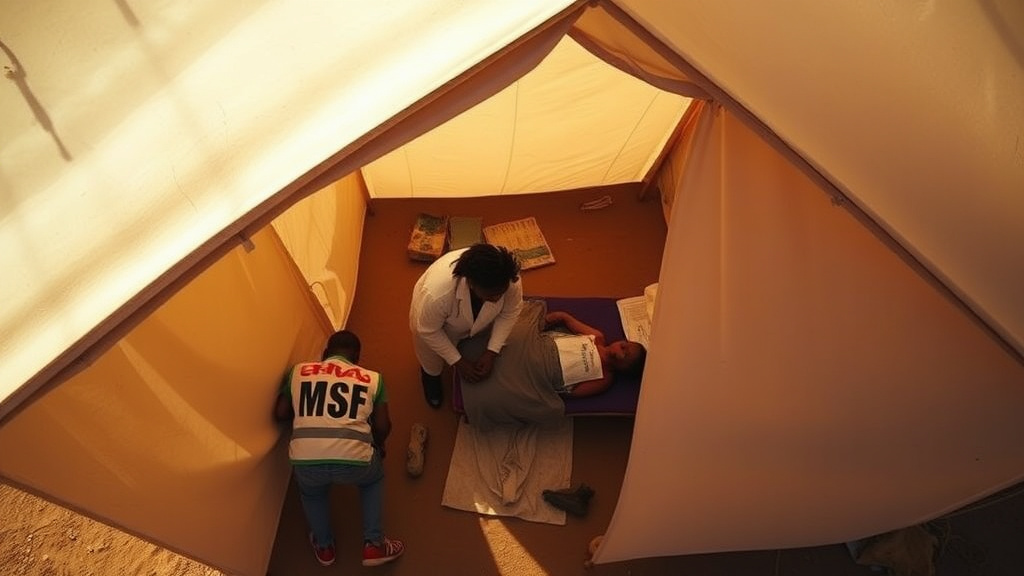
MSF Reports Widespread Sexual Violence Against Women in Darfur Conflict
Medical aid group documents systematic use of sexual violence as weapon of war across Sudan's Darfur region. No safe zones exist for women amid ongoing conflict.
 Top Stories
Sudan Seeks Special Aid Status in 2026 Global Development Strategy
Sudan calls for exceptional support measures within the 2026-2029 International Cooperation Strategy, emphasizing the unique needs of conflict-affected nations for recovery and reconstruction.