Gilead Refuses HIV Drug Sales to MSF Despite Africa Prevention Crisis
Pharmaceutical giant Gilead Sciences faces mounting criticism for refusing to sell breakthrough HIV prevention drug lenacapavir to Médecins Sans Frontières.

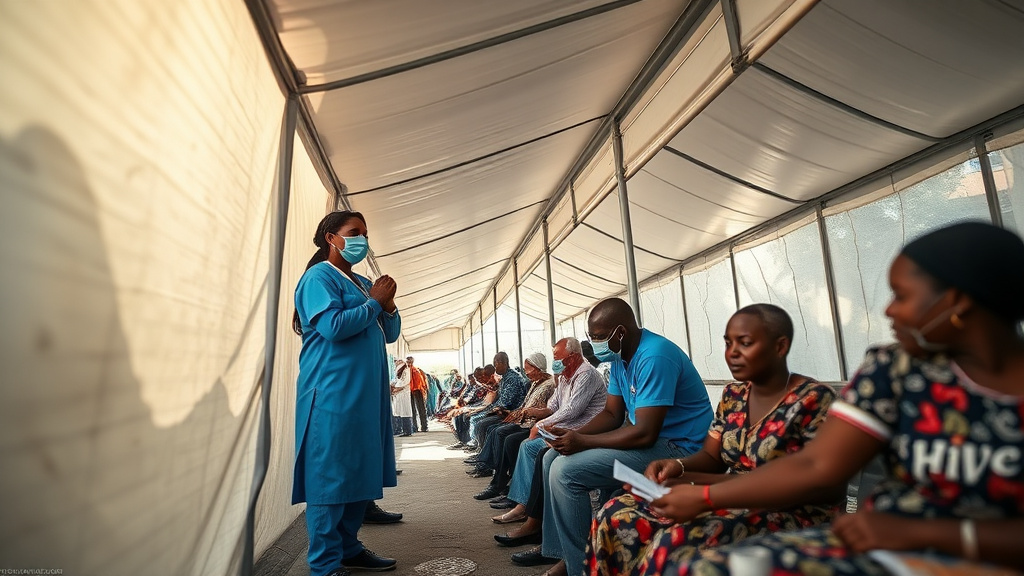
Pharmaceutical giant Gilead Sciences is facing intense scrutiny across Africa after refusing to sell its revolutionary HIV prevention drug lenacapavir directly to Médecins Sans Frontières (MSF), despite the humanitarian organization's repeated requests to access the medication for vulnerable populations. The twice-yearly injectable drug represents a significant breakthrough in HIV prevention, offering a more convenient alternative to daily oral medications that have proven challenging to maintain in resource-limited settings. This refusal comes at a critical time when sub-Saharan Africa continues to bear the heaviest burden of the global HIV epidemic, with approximately 25.6 million people living with HIV according to UNAIDS data from 2023. The controversy highlights ongoing tensions between pharmaceutical companies' profit motives and humanitarian organizations' efforts to expand access to life-saving medications in the world's most affected regions.
Revolutionary HIV Prevention Drug Faces Access Barriers
Lenacapavir, marketed under the brand name Sunlenca, represents a paradigm shift in HIV prevention strategies due to its unique dosing schedule requiring only two injections per year. Clinical trials have demonstrated remarkable efficacy rates, with studies showing 100% effectiveness in preventing HIV transmission when administered correctly, surpassing the performance of existing daily oral pre-exposure prophylaxis (PrEP) medications. The drug works by inhibiting HIV capsid function, preventing the virus from completing its replication cycle in a novel mechanism that differs from existing antiretroviral medications. However, Gilead's current pricing strategy has made the medication largely inaccessible in low and middle-income countries, with annual treatment costs exceeding $40,000 in high-income markets. MSF has been advocating for direct procurement arrangements that would bypass traditional distribution channels and reduce costs for humanitarian programs serving high-risk populations across Africa.
Sub-Saharan Africa Bears Disproportionate HIV Burden
The stakes of this access dispute are particularly high given Africa's continued dominance in global HIV statistics, with the continent accounting for approximately 67% of all people living with HIV worldwide. South Africa alone has the world's largest HIV epidemic, with an estimated 7.8 million people living with the virus, followed by Nigeria with 1.9 million cases according to the Joint United Nations Programme on HIV/AIDS. Young women and adolescent girls in sub-Saharan Africa face particularly elevated risks, with HIV incidence rates among this demographic remaining stubbornly high despite decades of prevention efforts. Traditional daily oral PrEP medications have shown limited uptake in many African contexts due to stigma, pill burden, and challenges with consistent access to healthcare facilities. The introduction of long-acting injectable options like lenacapavir could potentially revolutionize prevention efforts by reducing the frequency of clinical visits and eliminating daily pill-taking requirements that often lead to adherence challenges.
Read Also
Leaked Documents Link Ghana Presidential Advisor to $45M in Offshore AccountsConfidential financial documents reveal a senior advisor to Ghana's president operated a network of offshore accounts worth $45 million through shell companies in the BVI and Dubai.
Humanitarian Organizations Demand Expanded Access
Dr. Christophe Perrin, MSF's HIV advisor, stated in a recent press release: "Gilead's refusal to engage with humanitarian organizations on lenacapavir access represents a fundamental failure to prioritize public health over profit margins, particularly when the greatest need exists in communities that cannot afford current pricing structures." The organization has been advocating for tiered pricing mechanisms that would make the drug available at cost-plus pricing for humanitarian programs, similar to arrangements that have been successfully implemented for other essential medications including hepatitis C treatments and tuberculosis drugs. MSF's frustration stems partly from Gilead's history of eventually expanding access to breakthrough medications after sustained advocacy pressure, including previous negotiations around sofosbuvir for hepatitis C treatment. International health advocates argue that Gilead received substantial public funding for lenacapavir development through various government research grants and tax incentives, creating moral obligations to ensure global access regardless of patients' ability to pay market rates.
The controversy surrounding lenacapavir access reflects broader systemic issues in global health equity that have plagued HIV treatment and prevention efforts for decades. Pharmaceutical companies argue that high initial pricing is necessary to recoup research and development investments while funding future innovation pipelines, but critics contend that current patent systems create artificial scarcity for life-saving medications. As pressure mounts from advocacy groups, international health organizations, and African governments, Gilead may ultimately be forced to reconsider its current distribution strategy or face potential compulsory licensing actions that would allow generic manufacturers to produce more affordable versions of lenacapavir for humanitarian use.
Source: AllAfrica
Related Articles
 Top Stories
Nigerian Terror Suspects Admit Spying on US, Israeli Embassies in Abuja Court Case
Three terror suspects face trial in Abuja for allegedly conducting surveillance on US and Israeli diplomatic missions in Nigeria on behalf of Iranian contacts. Court grants accelerated hearing.
 Top Stories
Nigerian Court Fast-tracks Trial of 3 Iranian Embassy Spying Suspects
Three terror suspects face trial in Abuja for allegedly conducting surveillance on US and Israeli embassies in Nigeria on behalf of Iranian contacts. The case highlights growing concerns about international espionage networks.
 Top Stories
Africa Braces for Fuel Price Surge as Hormuz Strait Disruptions Escalate
Continental supply chain experts warn of rising fuel and food costs as shipping disruptions in critical Middle Eastern waterway threaten African imports.