Cape Mental Health Champions Rights for 50,000 Vulnerable South Africans
Non-profit organization advocates for dignity and inclusion of people with intellectual disabilities across Western Cape communities.

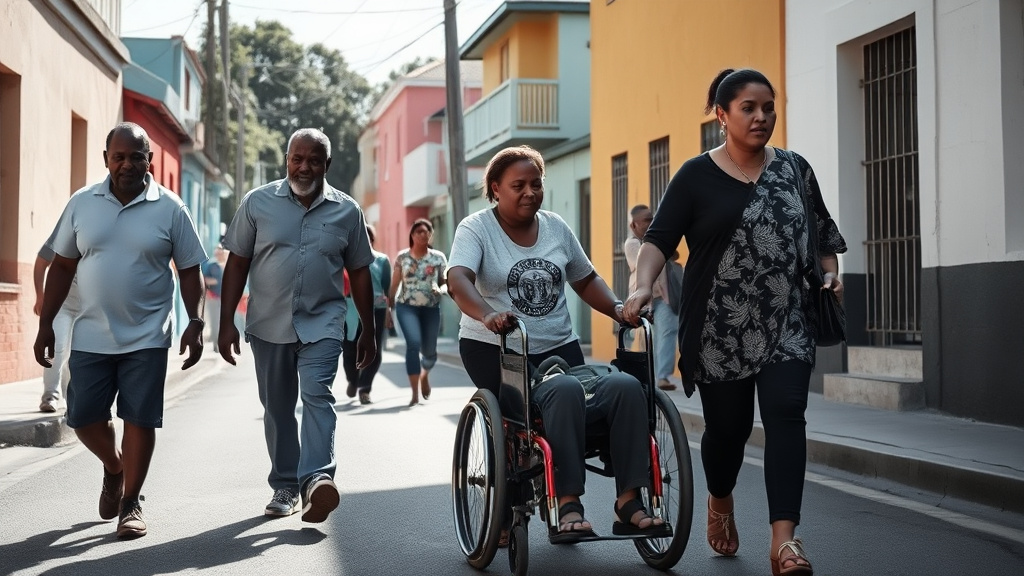
For decades, Cape Mental Health has stood as a beacon of hope for South Africa's most vulnerable citizens, championing the rights and well-being of people with intellectual disabilities across the Western Cape province. The community-based non-profit organization operates on a fundamental principle that challenges traditional care models: viewing individuals with intellectual disabilities not as passive recipients of charity, but as rights holders deserving dignity, protection, and full community inclusion. This approach has positioned the organization at the forefront of disability rights advocacy in a country where an estimated 2.9 million people live with some form of disability, according to Statistics South Africa's 2011 census data.
Decades of Community-Based Advocacy in Western Cape
Cape Mental Health's work spans multiple communities throughout the Western Cape, a province home to approximately 6.6 million people where social inequality remains stark despite democratic progress since 1994. The organization's community-based model reflects a broader shift in disability services across Africa, moving away from institutional care toward integrated community support systems. This approach aligns with international best practices outlined in the United Nations Convention on the Rights of Persons with Disabilities, which South Africa ratified in 2007. The Western Cape, as one of South Africa's most economically developed provinces, faces unique challenges in addressing disability rights amid rapid urbanization and persistent poverty affecting nearly 28% of its population.
The organization's advocacy work takes on particular significance within South Africa's complex social landscape, where historical apartheid policies systematically excluded people with disabilities from mainstream society. During the apartheid era, segregation extended beyond racial lines to include people with disabilities, who were often institutionalized or hidden from public view. Cape Mental Health's emphasis on community inclusion directly challenges these historical patterns of exclusion and marginalization. The organization works within a legal framework established by South Africa's progressive Constitution, which explicitly prohibits discrimination based on disability, and the White Paper on the Rights of Persons with Disabilities, adopted in 2015.
Rights-Based Approach Transforms Traditional Care Models
The organization's rights-based philosophy represents a significant departure from traditional charity models that have historically dominated disability services across Africa. Rather than focusing solely on medical interventions or basic care provision, Cape Mental Health emphasizes empowerment, self-determination, and community participation for people with intellectual disabilities. This approach recognizes that intellectual disability affects approximately 1-3% of the global population, with higher prevalence rates often recorded in developing countries due to factors including malnutrition, preventable diseases, and limited access to early intervention services. In South Africa specifically, the Department of Social Development estimates that intellectual disabilities affect roughly 0.9% of the population, though experts believe actual numbers may be significantly higher due to underreporting and diagnostic challenges.
The shift toward rights-based advocacy reflects broader changes in disability discourse across the African continent, where organizations increasingly challenge paternalistic approaches to disability services. This transformation has been influenced by the disability rights movement that emerged globally in the 1960s and 1970s, gaining momentum in Africa through the work of organizations like Disabled People South Africa (DPSA) and the African Decade of Persons with Disabilities (2010-2019). Cape Mental Health's work contributes to this continental movement by demonstrating practical applications of rights-based principles at the community level.
Read Also
Springboks Include 19-Year-Old Flanker Siya Mthethwa in 35-Man Squad for All Blacks SeriesHead coach Rassie Erasmus picks uncapped 19-year-old Siya Mthethwa — with just four Super Rugby caps — in a bold selection for the test series against New Zealand.
Community Inclusion and Protection Initiatives
Cape Mental Health's commitment to dignity and protection addresses critical vulnerabilities faced by people with intellectual disabilities, who experience significantly higher rates of abuse, exploitation, and social exclusion compared to the general population. Research conducted by the University of Cape Town indicates that people with intellectual disabilities are up to four times more likely to experience physical or sexual abuse, with women and children with disabilities facing particularly high risks. The organization's protection initiatives operate within a context where South Africa reports some of the world's highest rates of gender-based violence, with people with disabilities facing compounded vulnerabilities due to communication barriers, social isolation, and limited access to support services.
The organization's inclusion efforts address systemic barriers that prevent people with intellectual disabilities from participating fully in South African society. These barriers include limited access to inclusive education, with only 12% of children with disabilities enrolled in mainstream schools according to Department of Basic Education statistics, and restricted employment opportunities, as people with disabilities face unemployment rates exceeding 75% compared to the national average of 29%. Cape Mental Health's community-based approach seeks to address these disparities through advocacy, awareness campaigns, and direct support services that promote social inclusion and economic participation.
According to disability rights advocate and researcher Dr. Theresa Lorenzo from the University of Cape Town, 'Community-based organizations like Cape Mental Health play a crucial role in translating policy commitments into lived reality for people with disabilities. Their work demonstrates that inclusion is not just about physical access, but about fundamentally changing how society views and values people with intellectual disabilities.' This perspective is echoed by Advocate Adila Hassim, who has noted that 'the shift from charity to rights-based approaches represents a fundamental transformation in how we understand disability and human dignity in post-apartheid South Africa.'
Cape Mental Health's decades-long commitment to championing the rights of people with intellectual disabilities reflects broader efforts to build a more inclusive South African society. As the country continues to grapple with the legacies of apartheid and ongoing social inequalities, organizations like Cape Mental Health provide essential leadership in demonstrating that true transformation requires the full inclusion of all citizens, regardless of ability. Their work serves as a model for community-based disability advocacy across Africa, where an estimated 80 million people with disabilities continue to face significant barriers to full social participation and rights realization.
Source: AllAfrica
Related Articles
 Top Stories
South African Health Minister Opens Dialogue on NHI Implementation Amid Legal Challenges
Health Minister Aaron Motsoaledi initiates talks with medical organizations to address concerns over the National Health Insurance Act, as multiple stakeholders prepare legal challenges.
 Top Stories
France Denies Excluding South Africa from G7 Summit Amid Diplomatic Tensions
French officials refute claims of US pressure leading to South Africa's G7 summit exclusion, as Kenya receives invitation. The diplomatic row highlights shifting African representation in global forums.
 Top Stories
South African Churches Mark Good Friday Amid Global War and Suffering
Cape Town religious leaders reflect on Holy Week's meaning during times of conflict. Churches across South Africa observe solemn traditions while addressing contemporary suffering.